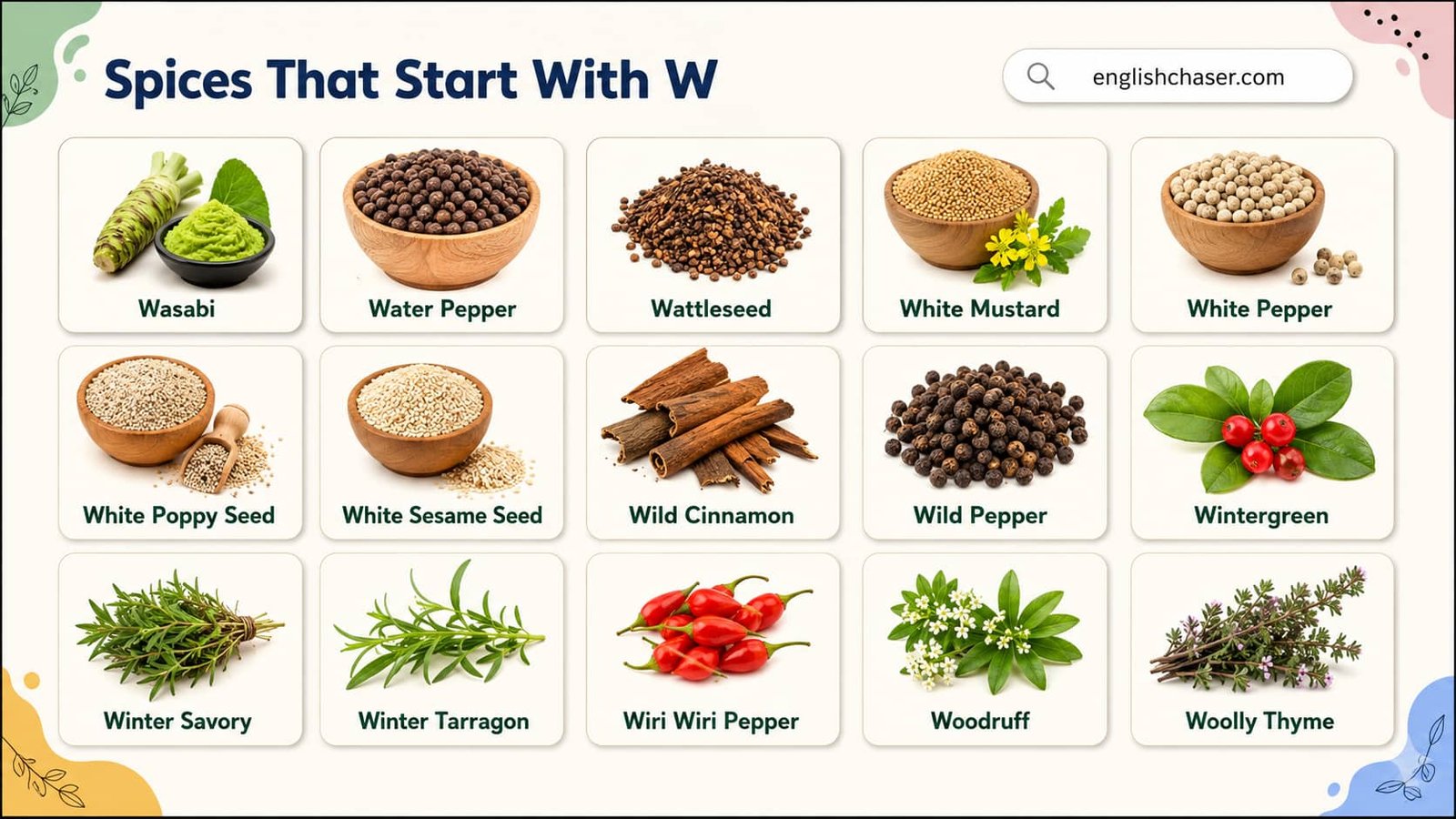

Spices that Start With W include several distinct seasonings, seeds, and pepper varieties used in different culinary traditions. White peppercorns and white mustard seeds are familiar whole spices, while ground white pepper offers a finer form of the same pepper. Wattle seed comes from Australian acacia species and has a roasted, nutty character. West African pepper refers to regional peppery spices used in African cooking. Learning these names helps identify W spices by form, origin, and flavor.
What Spices that Start with W
Spices Start with W come from different plants and regions, so their flavors and uses can vary greatly. Some are common pantry seasonings, while others belong to regional food traditions. The main names include white pepper, white mustard, wattle seed, and West African pepper.
List Of Spices that Start with W
The following entries cover recognized spice names beginning with W, including whole seeds, peppercorns, ground forms, and regional seasonings.
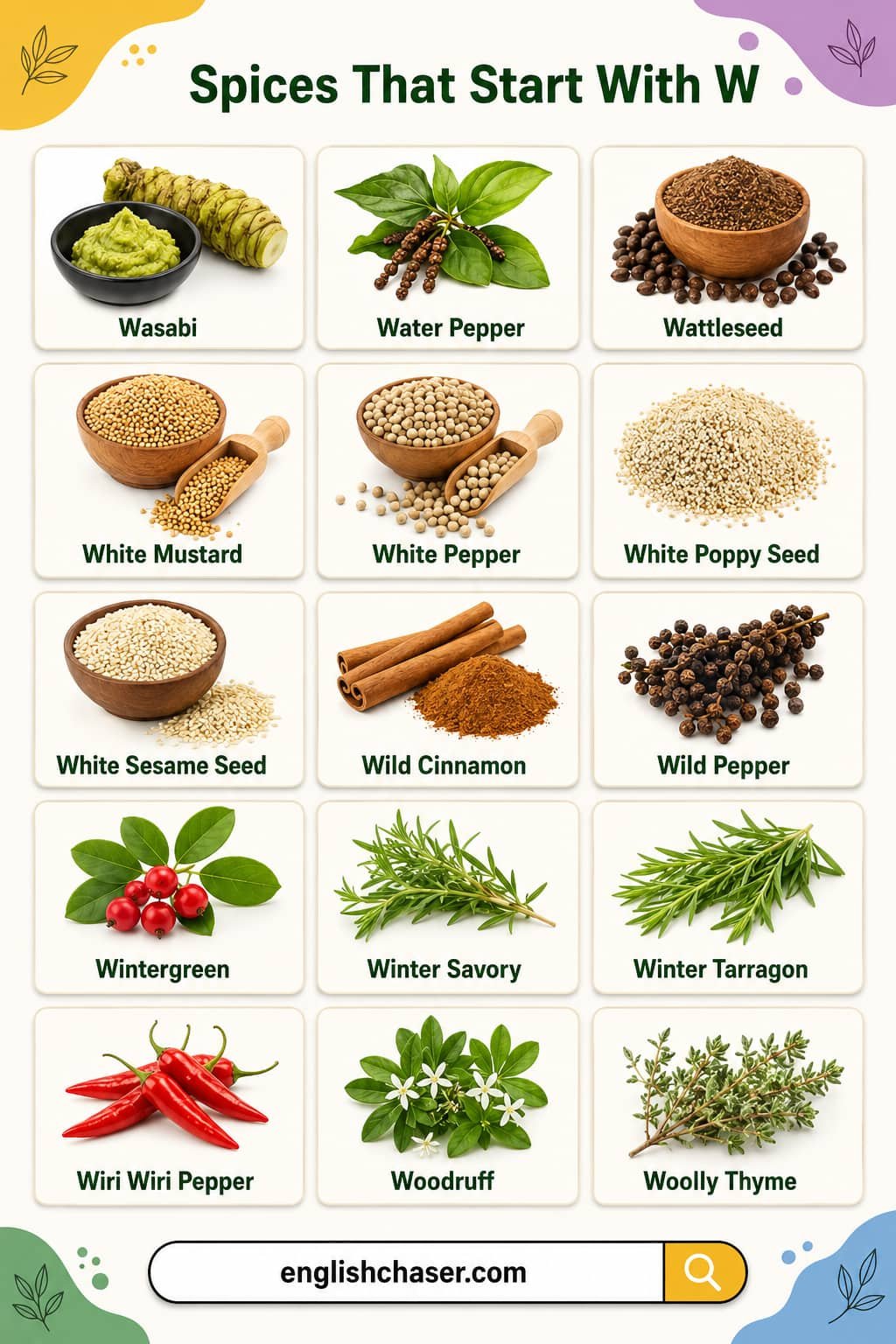
- Wasabi
- Water Pepper
- Wattleseed
- White Mustard
- White Pepper
- White Poppy Seed
- White Sesame Seed
- Wild Cinnamon
- Wild Pepper
- Wintergreen
- Winter Savory
- Winter Tarragon
- Wiri Wiri Pepper
- Woodruff
- Woolly Thyme
Spices that Start with W with Pictures
Wasabi
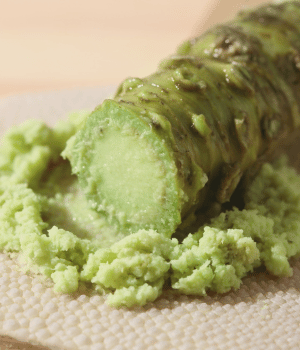
Wasabi is a pungent Japanese condiment made from the grated rhizome of Eutrema japonicum. Its sharp heat rises quickly and fades faster than chili pepper heat. Fresh wasabi has a green color, crisp aroma, and slightly sweet, vegetal flavor. It is traditionally served with sushi and sashimi, while prepared wasabi is also used in sauces, dressings, noodles, and snacks.
Water Pepper
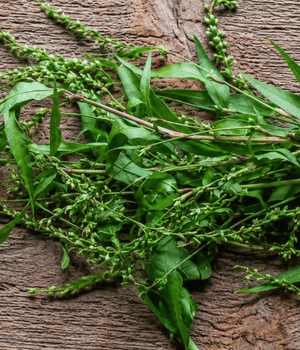
Water pepper is a spicy herb known botanically as Persicaria hydropiper. It grows in damp areas and produces narrow leaves with a sharp, peppery taste. The fresh herb has traditionally been used in Japanese cooking, particularly for adding heat to dishes and condiments. Its flavor can be quite intense, so only small amounts are usually added to food.
Wattleseed
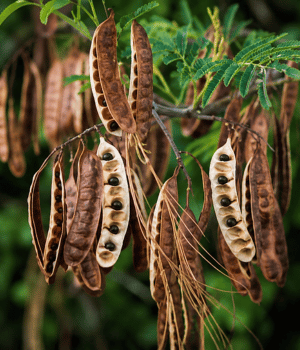
Wattleseed is a culinary ingredient made from the seeds of selected Australian acacia species, especially Acacia victoriae. The seeds are roasted and ground before being used as a spice. Roasted wattleseed has a distinctive nutty, coffee-like aroma with hints of chocolate and hazelnut. It adds depth to breads, desserts, sauces, meat dishes, and modern Australian spice blends.
White Mustard
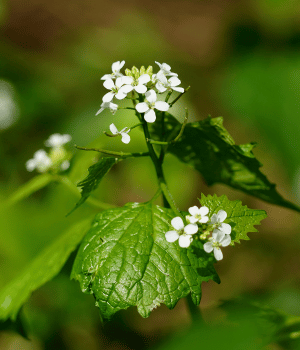
White mustard is the seed of Sinapis alba, a mustard plant grown widely for culinary and agricultural use. Its round, pale yellow seeds have a milder flavor than many brown or black mustard seeds. Whole seeds can be pickled or used in spice blends, while ground white mustard is commonly made into prepared mustard and other savory seasonings.
White Pepper
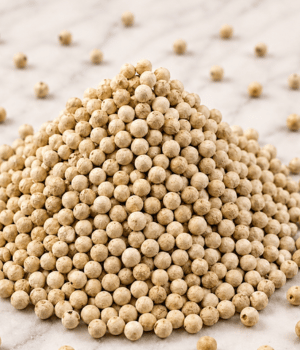
White pepper is a spice made from mature pepper berries whose outer fruit layer has been removed before drying. It comes from Piper nigrum, the same plant that produces black pepper. White pepper has a warm, earthy, slightly fermented flavor and a lighter appearance. It is often used in soups, sauces, mashed potatoes, seafood, and pale-colored dishes.
White Poppy Seed
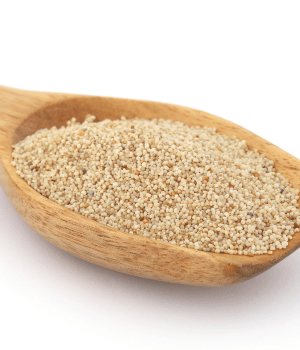
White poppy seed is the small, pale seed of the opium poppy, Papaver somniferum, cultivated for culinary purposes. It has a mild, nutty flavor and a delicate crunch. White poppy seeds are commonly added to breads, pastries, curries, sauces, and desserts. Their light color makes them especially useful when a recipe needs poppy-seed flavor without dark specks.
White Sesame Seed
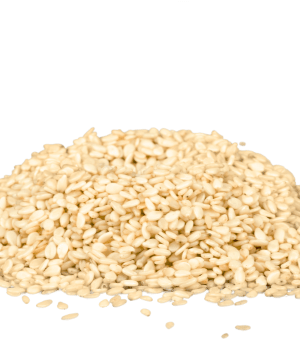
White sesame seed is the pale seed of Sesamum indicum, valued for its nutty taste and crunchy texture. The seeds are often used whole or lightly toasted to intensify their aroma. White sesame appears in breads, noodles, salads, sauces, confectionery, and Asian dishes. Sesame paste and other seasonings are also made from these seeds after grinding.
Wild Cinnamon
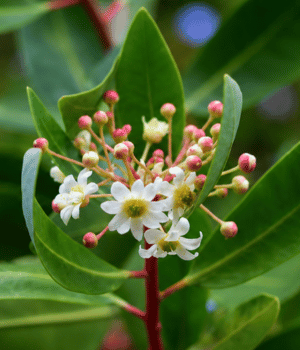
Wild cinnamon is a common name applied to several aromatic plants that resemble true cinnamon in fragrance or flavor. Depending on the region, the name may refer to different species rather than Cinnamomum verum. Its bark or leaves can provide warm, woody, sweet-spicy notes. Because the identity varies geographically, wild cinnamon should be identified botanically before culinary or herbal use.
Wild Pepper
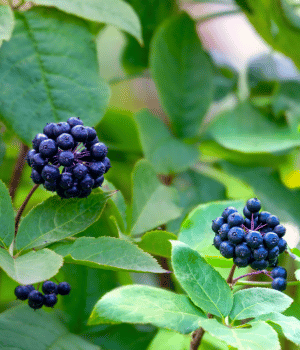
Wild pepper is a broad culinary name for peppery plants or wild-growing pepper species, and its exact identity varies by region. Some types belong to the Piper genus, while others are unrelated plants with a similar pungent taste. Their fruits, leaves, or other parts may be used as seasonings. Flavor can range from sharp and hot to earthy and aromatic.
Wintergreen
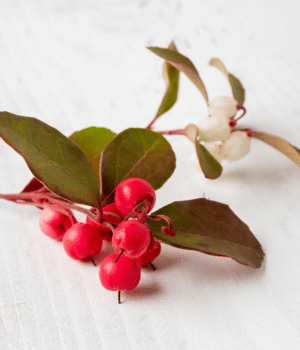
Wintergreen is an aromatic plant, commonly referring to Gaultheria procumbens, whose leaves contain a naturally occurring mint-like compound called methyl salicylate. Its strong scent and cooling flavor resemble mint but have a distinctive sweet character. Wintergreen is better known for flavoring and aromatic uses than as a conventional cooking spice. Culinary use should involve properly prepared food-grade products.
Winter Savory
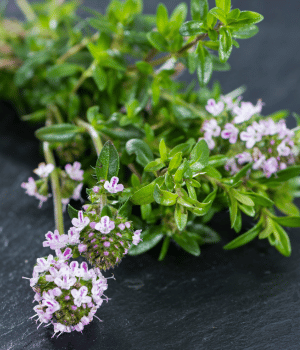
Winter savory is an aromatic herb known as Satureja montana. It has narrow green leaves and a strong, peppery flavor with earthy and slightly minty notes. The herb is commonly used fresh or dried in beans, meats, soups, stews, vegetables, and stuffing. Its robust flavor holds up well during cooking, so it is often added to hearty dishes.
Winter Tarragon
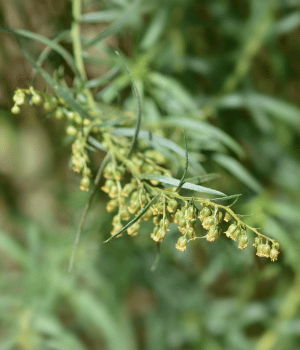
Winter tarragon is a regional or trade name that can refer to tarragon-like herbs used when traditional French tarragon is unavailable. The name is not consistently tied to one botanical species. These plants may provide an anise-like, herbal flavor similar to tarragon. Because the identity varies, the botanical name should be checked when precise culinary or gardening information is needed.
Wiri Wiri Pepper
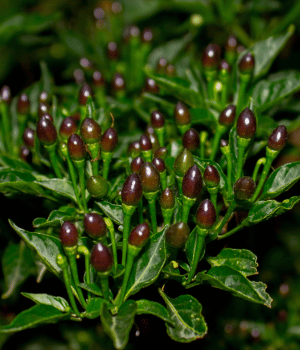
Wiri Wiri pepper is a small, fiery chili associated with Guyanese cuisine and commonly identified with Capsicum frutescens. The round peppers may appear red or other bright colors when mature. They deliver intense heat with a fruity, sharp flavor. Wiri Wiri is used in pepper sauces, marinades, stews, chutneys, and other dishes where a strong chili character is desired.
Woodruff
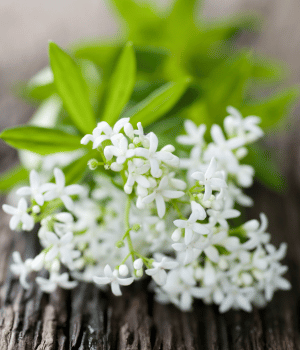
Woodruff is an aromatic herb, usually referring to Galium odoratum, a low-growing plant with whorled leaves and small white flowers. Fresh leaves have a mild scent, while dried woodruff develops a stronger sweet, hay-like aroma. It has traditionally flavored beverages, desserts, syrups, and sweets, particularly in parts of Europe. The herb is valued mainly for its distinctive fragrance.
Woolly Thyme
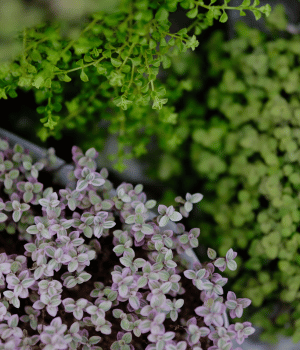
Woolly thyme is a low-growing ornamental thyme known for its soft, hairy leaves and creeping growth habit. It is generally associated with Thymus pseudolanuginosus and is grown primarily as a groundcover rather than a culinary herb. Its foliage produces a thyme-like aroma when crushed, but it is not a standard kitchen seasoning. Its main appeal comes from its texture and garden use.
Whole Spices Beginning with W
Whole Spices beginning with W are usually recognized by their natural seed or peppercorn form. White peppercorns and white mustard seeds are the strongest entries in this category because both are commonly sold and used as whole spices.
- White Peppercorns: Pale dried pepper berries with a sharp, earthy flavor and a smooth, light appearance.
- White Mustard Seeds: Small, round mustard seeds with a mild heat and slightly nutty, pungent taste.
Ground Spices that Start with W
Grinding changes the texture of a spice while keeping its main identity. Ground white pepper is widely recognized, while ground wattle seed provides a roasted Australian flavor from finely milled seeds.
- Ground White Pepper: Finely ground white peppercorns with warm heat, earthy notes, and a pale grayish appearance.
- Ground Wattle Seed: Roasted and ground wattle seed with deep nutty, coffee-like, and cocoa-like flavor notes.
Regional Spices From Africa and Oceania
Seasoning beginning with W names are closely connected with regional food traditions rather than worldwide pantry use. West African pepper belongs to African culinary traditions, while wattle seed is strongly associated with Australian native cuisine.
- West African Pepper: A regional pepper name connected with West African seasonings and aromatic spicy ingredients.
- Wattle Seed: An Australian native spice made from selected edible acacia seeds after roasting and grinding.
Spices Starting with W: White Pepper vs Black Pepper
White pepper Spices that Start with W and black pepper Spic both come from Piper nigrum, but their processing differs. White pepper has its outer fruit layer removed, while black pepper retains the dried outer skin. As a result, white pepper usually has a more earthy and fermented character, while black pepper tends to have a brighter, sharper aroma.
FAQs About Spices that Start with W
Common W spices include white peppercorns, white mustard seeds, wattle seed, ground white pepper, and West African pepper.
White peppercorns and white mustard seeds are whole spices in their natural dried forms. Wattle seed can also be used whole or ground.
White pepper and white mustard are among the more familiar W spices. Wattle seed and West African pepper are more regional.
White peppercorns and white mustard seeds are whole forms. Ground white pepper and ground wattle seed are powdered forms of their respective ingredients.
Takeaway
Spices that Start With W include familiar seasonings such as white peppercorns and white mustard seeds, along with regional ingredients such as wattle seed and West African pepper. Knowing their forms, origins, and flavor traits makes the names easier to understand and distinguish. Pictures can add another useful learning step by letting readers compare the appearance of each spice alongside its name.
Read more